

Everything you need to know about visiting Suffolk
Suffolk moves at its own pace, and that pace is slow in the best possible way. This is the county that gave John Constable his subject matter, and standing in Dedham Vale on a still morning, watching the light move across the water meadows exactly as it does in his paintings, it’s obvious why he never really needed to look anywhere else.
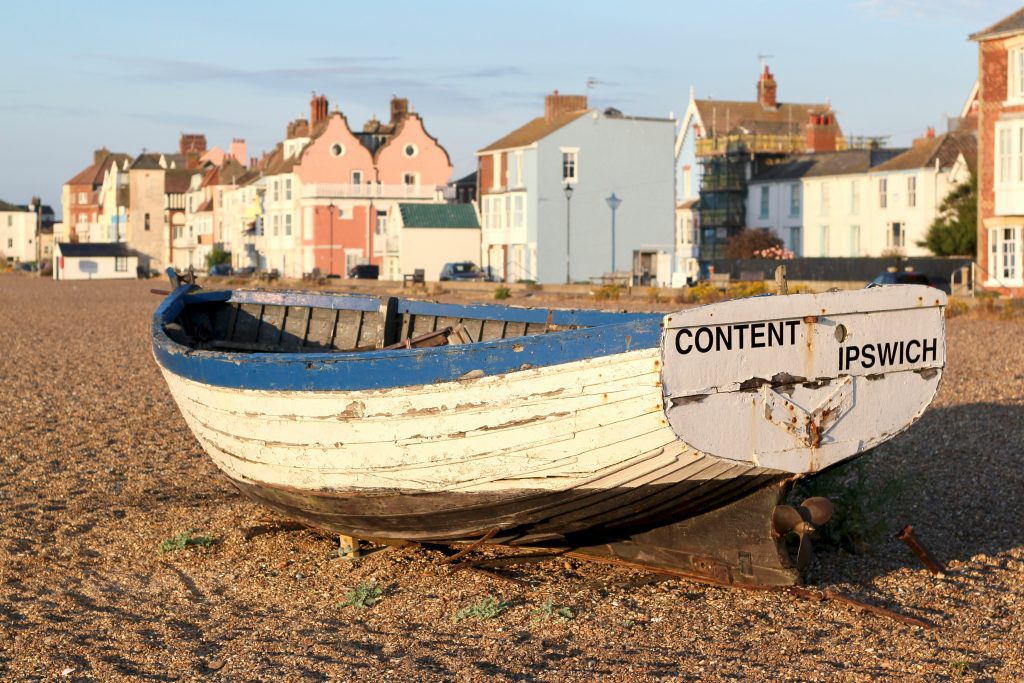
The coast here has a particular character too, shingle rather than sand in places, pastel-painted beach huts, and towns like Southwold and Aldeburgh that have resisted the pier-and-arcade version of the seaside in favour of something quieter and, frankly, better dressed. Inland, timber-framed wool towns like Lavenham sit almost exactly as they did five centuries ago, when Suffolk wool made this one of the wealthiest corners of England.
A log cabin here suits a holiday built around unhurried days, a walk on the beach, a proper pub lunch, an afternoon doing very little in a market square that hasn’t changed much since Tudor times. Evenings tend to be about good food and an early night, ready to do it all again tomorrow.
What follows covers Constable Country, the Suffolk coast, the wool towns, and Bury St Edmunds, everything you need to plan a proper Suffolk break.
Why Stay in Suffolk
Scenery
Rolling farmland, ancient wool towns, and a coastline of shingle beaches, reed marshes and pastel beach huts.
walking
Coastal walking, birdwatching, sailing on the Deben and Orwell estuaries, and exploring some of England's best-preserved medieval towns.
Access
The A14 and A12 both cross the county, with direct trains from London Liverpool Street to Ipswich in under an hour.
romance
A candlelit dinner in Aldeburgh followed by a walk along the shingle has been a Suffolk tradition for generations of returning visitors.
Constable Country and Dedham Vale
Dedham Vale, straddling the Suffolk-Essex border along the River Stour, is the landscape John Constable painted obsessively throughout his career, and remarkably little of it has changed since. Flatford Mill, the setting for his most famous work, “The Hay Wain,” still stands, along with Willy Lott’s House beside it, both owned and cared for by the National Trust.
The valley rewards slow exploration rather than a checklist approach — a punt or rowing boat hired from Flatford, a walk along the river towards Dedham village, or simply sitting on the riverbank with the exact view Constable painted two centuries ago. Dedham itself, technically over the border in Essex, has a handsome high street and a church tower that appears in several of Constable’s works.
East Bergholt, Constable’s birthplace, is a short walk from Flatford and worth the detour for its unusual detached bell cage, built because the church tower itself was never finished — a genuinely odd piece of local history that most visitors miss entirely.
The Suffolk Coast
Southwold remains the coast’s best-loved town, its candy-striped pier, working lighthouse right in the middle of the town, and rows of colourful beach huts giving it a genuinely distinctive character that’s resisted the tackier trappings of some seaside resorts. Adnams Brewery, based here since 1872, still delivers beer around town by horse and cart on special occasions.
Aldeburgh, a little further south, has a similarly understated charm, its shingle beach lined with fishing boats selling the day’s catch straight from wooden huts, and the Aldeburgh Festival, founded by composer Benjamin Britten, bringing genuinely world-class classical music to the town each June.
Between the two, Minsmere RSPB reserve is one of the best birdwatching sites in Britain, its mix of reedbed, heath and lagoon habitat drawing avocets, bitterns and marsh harriers, alongside a genuinely excellent visitor centre for those newer to birdwatching.
Lavenham and the Wool Towns
Lavenham is, by most measures, the finest surviving medieval town in England, its crooked, timber-framed buildings a direct legacy of the wool trade that made Suffolk one of the wealthiest counties in the country during the 15th century. The Guildhall, now a museum, tells that story in detail, and the wonky angles of the surrounding buildings — genuinely leaning, not a trick of the light — are the result of using unseasoned green timber that warped as it dried.
Long Melford, a little further west, has one of the longest village high streets in England and its own magnificent wool church, along with Kentwell Hall and Melford Hall, two substantial Tudor houses within easy walking distance of each other.
Clare, smaller and quieter than either, has a genuinely good ruined castle set in a country park, plus one of the more unusual pieces of local history in the county — a house decorated entirely in elaborate pargeting, a decorative plasterwork technique that was something of a Suffolk speciality.
Bury St Edmunds and Central Suffolk
Bury St Edmunds grew up around one of medieval England’s most powerful abbeys, and though only ruins remain of the abbey itself, they sit within genuinely beautiful public gardens right in the centre of town, alongside the cathedral that eventually grew from the abbey’s parish church. The Abbey Gardens make an excellent stop between exploring the town’s Georgian and medieval streets.
The Greene King brewery, founded here in 1799, still operates in the town centre, and its visitor centre runs tours explaining the brewing process alongside the company’s long local history. Moyse’s Hall, one of the oldest surviving domestic buildings in England, now houses a museum with a genuinely eclectic and slightly macabre collection.
Ickworth House, just outside the town, is one of Suffolk’s more architecturally unusual stately homes, built around a vast rotunda that its eccentric builder, the 4th Earl of Bristol, intended as a gallery for his art collection — a house that looks more like it belongs in Italy than the Suffolk countryside.
Top Experiences at a Glance
- Visit Flatford Mill and Constable's Dedham Vale
- Walk Southwold's pier and beach huts
- Birdwatch at Minsmere RSPB reserve
- Explore the medieval streets of Lavenham
- Tour Bury St Edmunds Abbey Gardens
- Watch the sunset from Aldeburgh's shingle beach
- Visit Ickworth House's unusual rotunda
- Hire a boat on the River Stour at Flatford
Food and Drink in Suffolk
Suffolk’s coast has a genuinely strong seafood tradition, with Aldeburgh’s fish huts selling freshly landed crab, lobster and smoked fish straight off the boats, and Southwold and Orford both home to excellent smokehouses. Adnams, brewed in Southwold since 1872, remains the county’s best-known beer, though a growing number of smaller breweries have opened across Suffolk in the last decade.
Inland, the county’s rich farmland produces genuinely good pork and beef, alongside Suffolk-grown asparagus in season and a strong tradition of local cheesemaking. Bury St Edmunds’ Moyse’s Hall area and the town centre generally have a good spread of independent cafés and restaurants worth exploring beyond the obvious chains.
For something sweeter, Suffolk’s apple orchards produce a respectable amount of cider, and several small vineyards have established themselves in the county’s warmer, drier microclimate, producing English sparkling wine that’s begun winning attention well beyond the county borders.
Suffolk also has a long tradition of smoking its own bacon and ham, particularly around the county’s traditional pig farms, and a Sunday lunch built around locally reared pork is a fairly reliable way to end a day of walking well.
Suffolk for Families and for Couples
Families do well on the coast — Southwold’s beach and pier, crabbing off Walberswick’s bridge, and the wide, safe sands further along at places like Felixstowe all make for easy, low-stress days out. Minsmere’s boardwalks and hides are accessible enough for children too, with the visitor centre doing a good job of making birdwatching feel like an adventure rather than a wait.
Couples tend to gravitate towards the wool towns and the quieter stretches of coast — a slow wander through Lavenham, dinner in Aldeburgh, or a walk along the Stour at Flatford as the light softens in late afternoon. Suffolk’s whole pace suits time spent together without much of an agenda.
Rainy-day options are easy to find too, from the museums in Bury St Edmunds and Ipswich to the National Trust properties dotted across the county, meaning a poor forecast rarely derails a Suffolk holiday the way it might elsewhere.
A Day Out From Your Suffolk Lodge
Start the morning at Flatford Mill, hiring a rowing boat or simply walking the riverside path towards Dedham, then have lunch in the village before heading back. Finish the afternoon in Lavenham, wandering the crooked medieval streets and visiting the Guildhall — a day that moves from Constable’s landscape to Suffolk’s wool-trade history without much driving in between.
For a coastal alternative, spend the morning at Minsmere, then head to Aldeburgh for fish and chips eaten on the beach, finishing with a walk along the shingle towards the Martello tower at the town’s southern edge as the tide comes in.
Suffolk's Villages
Kersey, with its ford running straight across the main street, is one of the most photographed villages in the county and largely untouched by modern development. Walberswick, across the river from Southwold, has its own quieter beach and a long-standing tradition of crabbing off the footbridge that draws families back year after year. Orford, at the mouth of the River Alde, has a genuinely excellent smokehouse and a Norman castle keep with sweeping views out over the estuary.
Cavendish, a little further inland, has one of the prettiest village greens in Suffolk, its pink-washed cottages arranged around the church in a way that photographs beautifully in any season. Thornham Parva and Thornham Magna, further north, sit within a genuinely peaceful stretch of countryside and are worth the detour for anyone wanting to see rural Suffolk away from its more visited towns.
What to Pack for Suffolk
Layers and a windproof coat are worth having even in summer, since the coast can turn breezy quickly. Comfortable shoes for cobbled streets in the wool towns, and a bucket and line if crabbing at Walberswick is on the agenda. Binoculars are well worth packing if Minsmere or any of the coastal reserves are on your list.
Wildlife in Suffolk
Minsmere is the headline draw, with avocets, bitterns and marsh harriers among its star residents, alongside adders and water voles in the reserve’s quieter corners. Suffolk’s coast also hosts one of England’s largest concentrations of nightingales in a handful of protected woodlands, while the county’s rivers and estuaries support otters and a wide range of wading birds through the winter months.
Grey and common seals are regularly spotted off the coast, particularly around Orford Ness, and the Suffolk Sandlings heathland, a rare and dwindling habitat, supports a distinctive mix of Dartford warblers and nightjars found in relatively few other parts of England.
Suffolk's Historic Houses
Ickworth House’s dramatic rotunda and eccentric history make it the county’s most architecturally distinctive stately home. Kentwell Hall and Melford Hall, both near Long Melford, offer a more traditional Tudor experience, while Framlingham Castle, with its complete circuit of curtain walls, is one of the best-preserved medieval castles in the east of England.
Helmingham Hall, still lived in by the same family that built it, adds a working Tudor estate with deer park and walled gardens to the mix, and is generally quieter and less visited than the county’s bigger-name houses despite being just as rewarding a visit.
Planning Your Suffolk Log Cabin Holiday
The A14 connects Suffolk to the Midlands and the A12 runs down the coast towards Essex and London, with direct trains from London Liverpool Street reaching Ipswich in around an hour. A car is genuinely useful for exploring the wool towns and the quieter stretches of coast, since public transport thins out considerably away from Ipswich and the A12 corridor.
Coastal roads can get busy on summer weekends, particularly around Southwold and Aldeburgh, so an early start helps secure parking in both towns. Inland, the wool towns’ narrow, historic streets mean parking is often just outside the centre rather than directly on the high street, which is generally the better option in any case for enjoying them properly on foot.
Best Time to Visit Suffolk
Spring brings nesting birds to Minsmere and blossom to the county’s orchards. Summer is peak season for the coast, with the Aldeburgh Festival held each June. Autumn brings migrating birds to the reedbeds and a genuine quietness back to the wool towns. Winter offers dramatic coastal walks and cosy pub lunches with far fewer visitors than summer.
faq
Is Suffolk good for a log cabin holiday? Yes — the mix of coast, countryside and exceptionally well-preserved medieval towns makes it one of the most varied counties in the east of England.
Is Suffolk part of East Anglia? Yes, Suffolk is one of the counties that makes up East Anglia, alongside Norfolk, Essex and Cambridgeshire.
Is Suffolk’s coast good for swimming? The sea is generally cooler than the south coast, but plenty of visitors swim at Southwold and Aldeburgh, particularly in summer.
What’s the best base, the coast or the wool towns? Both are close enough to combine — Suffolk is a small county, and a cabin roughly central to both makes day trips to either straightforward.
Is Minsmere worth visiting for non-birdwatchers? Yes — the reserve’s boardwalks, hides and coastal views make for a genuinely enjoyable walk even without any particular interest in birds.
If Suffolk’s mix of coast and countryside appeals, Dorset log cabin holidays and Somerset log cabin holidays both offer their own take on quiet English coastline and rolling countryside, each worth exploring on a future trip.
Whatever draws you to Suffolk — Constable’s water meadows, Southwold’s beach huts, or a slow afternoon in Lavenham — the county has a way of resetting the pace of a holiday entirely. Most visitors leave more rested than when they arrived, which is really the whole point.