

Everything you need to know about visiting Lincolnshire
Lincolnshire is easy to underestimate from a distance, and that’s precisely its charm once you actually arrive. This is the county of enormous skies and even bigger horizons, where the flat fenland fields run out towards the coast and the cathedral city of Lincoln rises up out of nowhere, its towers visible for miles across genuinely flat country.
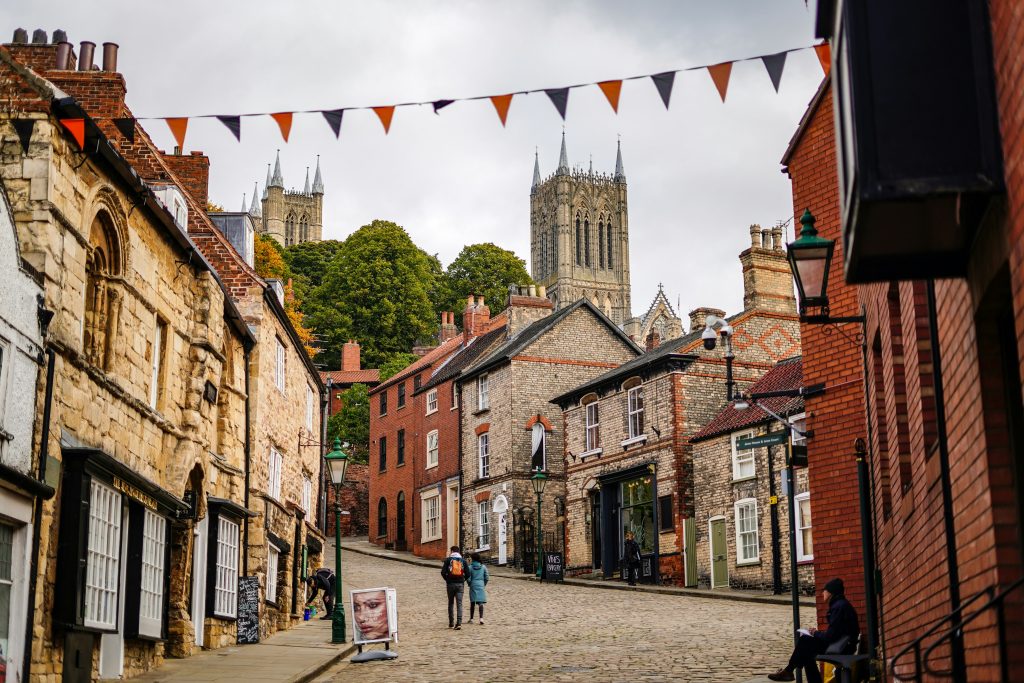
Lincoln Cathedral held the record as the tallest building in the world for over two centuries, and standing beneath it in the cobbled streets of the old town, that history still feels entirely plausible. Away from the city, the Lincolnshire Wolds offer a rolling, largely undiscovered alternative to the county’s famous flatness, while the coast runs from quiet nature reserves to classic, unpretentious seaside resorts.
A log cabin here suits a holiday built around genuine space: long walks with nothing on the horizon but sky, market towns that haven’t been overrun, and evenings where the quiet is the whole point rather than an inconvenience.
What follows covers Lincoln itself, the Wolds, the coast, and the county’s handsome market towns, everything you need to plan a proper Lincolnshire break.
Why Stay in Lincolnshire
scenery
Rolling Wolds countryside, vast fenland skies, and a coastline running from wild nature reserves to classic seaside towns.
activities
Cathedral and castle exploring, cycling the Wolds, birdwatching, and traditional seaside days on some of England's widest beaches.
access
The A1 and A46 both cross the county, with direct trains connecting Lincoln to London, Leeds and Peterborough.
romance
Lincoln's cobbled Steep Hill at dusk, cathedral bells ringing overhead, has been drawing couples back for generations.
Lincoln and Its Cathedral Quarter
Lincoln Cathedral dominates the city from every approach, its three towers visible from well outside the county on a clear day, and for 238 years, until the spire of Old St Paul’s Cathedral overtook it, it held the record as the tallest structure ever built. Inside, the cathedral’s Angel Choir and the mischievous carved Lincoln Imp, the city’s unofficial emblem, are worth seeking out specifically.
Steep Hill, the cobbled medieval street connecting the cathedral quarter to the city below, is lined with independent shops and cafés housed in genuinely ancient buildings, including the Jew’s House, one of the oldest surviving domestic houses in England still in continuous use. It’s a proper climb, but the view back down over the city rewards the effort.
Lincoln Castle, standing directly opposite the cathedral, holds one of only four surviving original copies of the Magna Carta, displayed in a purpose built vault, and the castle’s walls offer a complete walkable circuit with views over both the cathedral and the wider city
The Lincolnshire Wolds
The Wolds are Lincolnshire’s best kept secret, an Area of Outstanding Natural Beauty of rolling chalk hills that surprises most first time visitors expecting the county to be entirely flat. Tennyson grew up here, in the village of Somersby, and the landscape’s quiet, rolling character clearly left its mark on his poetry.
Louth, the Wolds’ main market town, has a genuinely handsome medieval centre and the tallest working parish church spire in England, along with a Thursday and Friday market that’s operated for centuries. The surrounding villages, Tealby, Donington on Bain and Belchford, are largely untouched by tourism and make excellent starting points for walking or cycling routes through the hills.
The Viking Way, a 147-mile long distance path running the length of the county, cuts straight through the heart of the Wolds, and shorter sections around Tealby and the Bluestone Heath Road give a genuine taste of the landscape without committing to the whole route.
The Lincolnshire Coast
Skegness remains the county’s classic seaside resort, its traditional pier, wide sandy beach and old fashioned amusements giving it an unashamedly nostalgic charm that’s kept families coming back for generations. A short distance along the coast, Gibraltar Point National Nature Reserve offers a genuinely different experience: dunes, saltmarsh and a well regarded bird observatory, all within walking distance of the resort’s bustle.
Further north, Mablethorpe and Sutton-on-Sea offer a quieter, more understated version of the same traditional seaside, with wide beaches that rarely feel crowded even in peak summer. The Lincolnshire coast’s flatness means the beaches here are exceptionally wide, and the tide can go out a considerable distance, giving huge stretches of sand to explore.
Donna Nook, near the coast’s northern end, is one of the best places in England to see grey seals up close, with several thousand pups born on the beach each winter, drawing visitors specifically for the pupping season between late October and December.
Stamford and the South
Stamford is regularly voted one of England’s finest towns, its honey coloured stone streets built almost entirely from local limestone giving it a warmth and consistency rare in an English market town. It’s frequently used as a filming location for period dramas precisely because so little needs to be dressed or disguised to make it look convincingly historic.
Burghley House, on the town’s edge, is one of the great Elizabethan houses of England, built for William Cecil, chief advisor to Elizabeth I, and its state rooms and extensive deer park make for a genuinely grand day out. The house also hosts one of the world’s leading horse trials each September.
Grantham, a little further north, has its own handsome market square and a genuine claim to scientific history as Isaac Newton’s birthplace, with the Grantham Museum telling that story alongside the town’s more recent connection as Margaret Thatcher’s birthplace.
Top Experiences at a Glance
- Climb Lincoln Cathedral's tower for city views
- Walk cobbled Steep Hill and see the Lincoln Imp
- See the Magna Carta at Lincoln Castle
- Walk or cycle the Lincolnshire Wolds around Tealby
- Watch grey seal pups at Donna Nook
- Explore Stamford's stone streets and Burghley House
- Birdwatch at Gibraltar Point near Skegness
- Visit Louth's market and its towering church spire
Visit Louth's market and its towering church spire
Lincolnshire sausages, coarser and more herb heavy than most regional varieties, are a genuine point of local pride, and Lincolnshire plum bread, a dense, spiced fruit loaf traditionally eaten with cheese, is worth seeking out at local bakeries. Grantham gingerbread, a distinctively hard, pale biscuit rather than the soft cake found elsewhere, has been made in the town since the 1740s.
Stokes High Bridge Café in Lincoln, built directly onto the medieval High Bridge over the River Witham, is one of the oldest café buildings in England still in use, and the city’s Bailgate area around the cathedral has a good spread of independent restaurants and pubs.
For something to drink, Batemans Brewery in Wainfleet, a short distance from Skegness, has been brewing since 1874 and remains one of the county’s best known names, while a handful of smaller Lincolnshire vineyards have begun producing respectable English wine from the county’s well drained soils.
Poacher cheese, made in the Lincolnshire Wolds and matured for a full year, has built a genuine reputation among British cheesemakers and is worth seeking out at farm shops across the county alongside other locally produced dairy.
Lincolnshire for Families and for Couples
Families do well on the coast: Skegness’s traditional beach and pier, the seal pups at Donna Nook in winter, and Gibraltar Point’s boardwalks all give children plenty to see without much walking required. Lincoln Castle’s medieval prison and Magna Carta vault also work well for older children with an interest in history.
Couples tend to gravitate towards Lincoln’s cathedral quarter and Stamford’s honey stone streets: a cathedral evensong, dinner on Steep Hill, or a slow wander through Stamford after a day at Burghley House. Lincolnshire’s understated charm suits a quieter, less rushed kind of break.
For a rainy day, the county has a good spread of indoor options too, from Lincoln’s museums to Grantham’s science and social history exhibits at the Grantham Museum, meaning a poor forecast rarely derails a Lincolnshire holiday entirely.
A Day Out From Your Lincolnshire Lodge
Start the morning exploring Lincoln Cathedral and Castle, then walk down Steep Hill for lunch in the Bailgate area. Finish the afternoon with a walk around the castle walls or a browse through the cathedral quarter’s independent shops, a day built entirely around one of England’s most complete medieval city centres.
For a coastal alternative, spend the morning at Gibraltar Point or Donna Nook depending on the season, then finish with fish and chips on Skegness seafront, a day that mixes genuine wildlife with classic, unpretentious English seaside.
Lincolnshire's Villages
Tealby, in the heart of the Wolds, is regularly named among the prettiest villages in the county, its thatched cottages and church tower sitting handsomely against the rolling chalk hills. Somersby, birthplace of Alfred, Lord Tennyson, remains tiny and largely unchanged, with the rectory where he grew up still standing. Woodhall Spa, in the south of the county, retains a genuinely elegant Edwardian character from its days as a fashionable spa town, complete with its own cottage museum and championship golf course.
Burgh le Marsh, between the Wolds and the coast, has a well preserved windmill still in occasional working order and a genuinely handsome market square. Fulbeck and Navenby, further south along the county’s limestone ridge, are both worth a stop for their honey coloured stone cottages, a quieter echo of the same building stone that made Stamford so celebrated.
What to Pack for Lincolnshire
A warm, windproof layer is worth having on the coast, where the flat landscape offers little shelter from the wind. Comfortable shoes for Lincoln’s cobbled Steep Hill, and binoculars if Gibraltar Point or Donna Nook are on the itinerary. A bike is worth bringing or hiring if the Wolds are part of the plan, since much of the region is genuinely well suited to cycling.
Wildlife in Lincolnshire
Donna Nook’s grey seal colony is the county’s signature wildlife spectacle, with several thousand pups born on the beach each winter. Gibraltar Point supports a wide range of coastal and migratory birds throughout the year, and the Wolds’ chalk streams and hedgerows hold healthy populations of brown hares, particularly visible during their spring boxing displays across open farmland.
Barn owls are a genuinely common sight hunting over the fenland at dusk, and the county’s rivers, including the Witham and the Ancholme, support otters that have made a steady recovery over the past few decades. Marsh harriers, once a genuine rarity in England, now breed successfully across several of Lincolnshire’s coastal reserves.
Lincolnshire's Historic Houses and Castles
Lincoln Castle and Burghley House form the county’s headline pairing, one a Norman fortress holding an original Magna Carta, the other one of England’s grandest Elizabethan houses. Belton House, near Grantham, adds a beautifully preserved late Stuart mansion with extensive parkland, while Tattershall Castle, a striking red brick medieval tower, stands out dramatically against the surrounding flat fenland.
Doddington Hall, just outside Lincoln, is a well preserved Elizabethan house still lived in by descendants of the original family, with formal gardens that make an easy, gentle addition to a day otherwise spent exploring the cathedral quarter.
Planning Your Lincolnshire Log Cabin Holiday
The A1 runs along the county’s western edge and the A46 connects Lincoln to the Midlands, with direct trains linking Lincoln to London King’s Cross, Leeds and Peterborough. A car is genuinely useful for exploring the Wolds and the coast, since public transport away from the main towns is limited across much of the county.
Lincoln’s Steep Hill area is best explored on foot, with parking generally easier found in the lower city or near the castle than directly on the hill itself. The coast can get busy in peak summer around Skegness, so an early start or a visit to the quieter Mablethorpe and Sutton-on-Sea stretch is worth considering if crowds aren’t the plan.
Best Time to Visit Lincolnshire
Spring brings brown hares boxing across the Wolds and daffodils to Lincoln’s cathedral grounds. Summer is peak season for the coast and Wolds cycling. Autumn brings migrating birds to Gibraltar Point and the first of the season’s seal pups to Donna Nook. Winter is prime seal pupping season at Donna Nook, alongside quiet, atmospheric visits to Lincoln Cathedral.
faq
Is Lincolnshire good for a log cabin holiday? Yes, the mix of a genuinely spectacular cathedral city, rolling Wolds countryside and traditional coast makes it a varied and relaxed county to base yourself in.
Is Lincolnshire really flat everywhere? Not entirely: the Lincolnshire Wolds are a genuinely rolling, hilly Area of Outstanding Natural Beauty, quite different from the flat fenland the county is best known for.
When’s the best time to see the Donna Nook seal pups? Late October through December, with numbers usually peaking in late November.
Is Lincoln Cathedral worth visiting even for non-religious visitors? Absolutely, it’s one of the great works of medieval architecture in England, and the Magna Carta exhibit at the neighbouring castle adds further historical interest.
Is Lincolnshire a good county for cycling? Yes, particularly the Wolds, whose network of quiet lanes and gentler gradients make it a genuinely underrated cycling destination compared to better known hill regions.
If Lincolnshire’s mix of cathedral city, rolling Wolds and traditional coast appeals, Suffolk log cabin holidays and Yorkshire log cabin holidays both offer their own take on wide skies and understated English countryside, each worth exploring on a future trip.
Whatever draws you to Lincolnshire, the cathedral towers visible for miles, the seal pups at Donna Nook, or a quiet cycle through the Wolds, the county has a habit of surprising visitors who arrive expecting nothing more than flat fields. Most leave already planning where to explore next time.