

Everything you need to know about visiting Cumbria
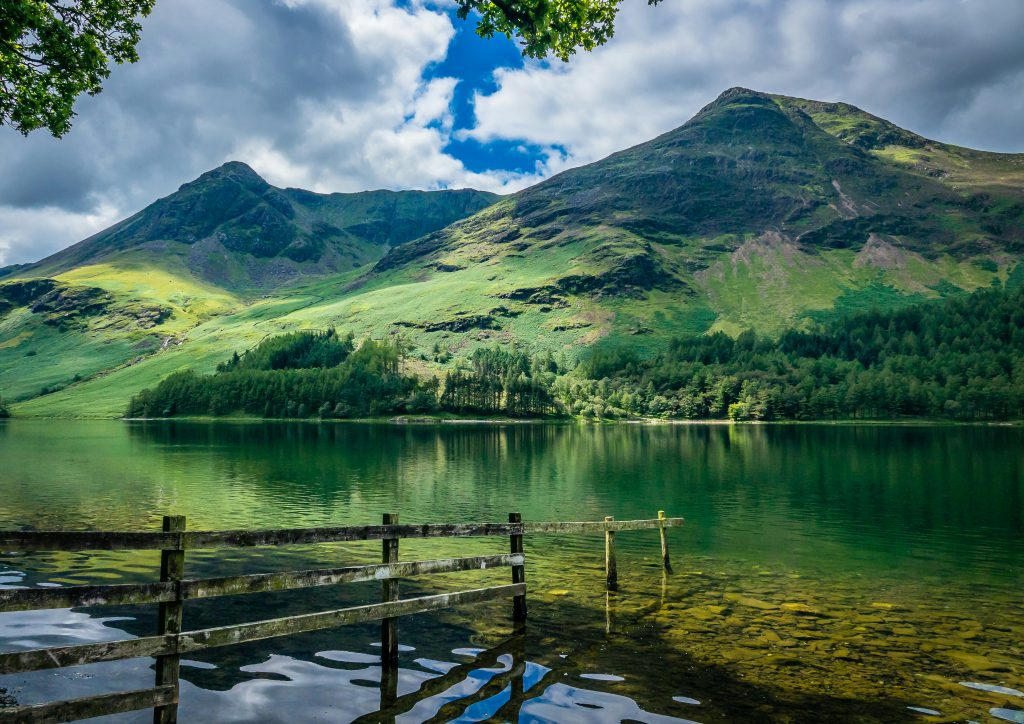
There is a moment, usually somewhere around Kirkstone Pass or the top of a lane you weren’t entirely sure your car could handle, when Cumbria stops being a place on a map and becomes something closer to a physical sensation. The fells rear up on either side, the light does something theatrical to the water below, and you understand, all at once, why people keep coming back here for fifty years running.
This is England’s biggest national park county and then some — the Lake District gets the postcards, but Cumbria stretches a long way past Windermere and Scafell Pike, out to the red sandstone villages of the Eden Valley, the wide Solway skies above Carlisle, and the quieter, largely undiscovered North Pennines. A log cabin here isn’t just a base, it’s a decent argument for the whole trip.
Evenings tend to follow a pattern. You come in from somewhere cold and slightly damp, put the kettle on, and by the time it’s boiled you’ve already decided you’re not leaving that spot on the sofa again tonight. If your lodge has a hot tub, that decision gets made even faster.
What follows is everything we’ve learned about doing Cumbria properly — where to stay, what to do, when to go, and which villages are worth the detour even when your satnav insists there’s a quicker way round.
Why Stay in Cumbria
Scenery
Sixteen major lakes, more mountains over 3,000ft than anywhere else in England, and valleys that look designed rather than eroded.
Activities
Fell walking, wild swimming, sailing, mountain biking, and enough gentle valley walks to keep non-hikers just as happy.
Getting there
The M6 runs straight up the county's eastern edge, with the West Coast Main Line stopping at Penrith and Oxenholme for anyone arriving by train.
Romance
Candlelit dinners with a lake view have been a Cumbrian speciality since long before the phrase "staycation" existed.
Exploring the Lake District
Windermere is the obvious starting point, and there’s no shame in that — a boat trip down England’s longest lake, with the fells stacking up behind you in increasingly improbable shades of grey-blue, earns its reputation. Bowness gets busy in summer, so if you’d rather skip the queue for ice cream, the smaller jetties further up the lake do the same view with a fraction of the crowd.
Keswick, up at the northern end, has a different character entirely — more outdoor shop than gift shop, more walking boots than flip-flops. It sits at the foot of Skiddaw and within easy striking distance of Derwentwater, which locals will tell you, usually unprompted, is the prettier of the two lakes.
For the properly committed, Scafell Pike is England’s highest point and a full day’s undertaking rather than an afternoon stroll. For everyone else, Catbells offers something close to the same sense of achievement in about a third of the time, with views over Derwentwater that make the climb feel entirely reasonable.
The Eden Valley
East of the Lakes, the Eden Valley runs quietly along, largely ignored by anyone racing up the M6 towards Scotland, which is precisely its appeal. This is red sandstone country — the villages, the church towers, even the soil in the fields, all carry that warm rust colour that makes the whole valley glow at sunset.
Appleby-in-Westmorland is the valley’s best-known stop, mostly thanks to its horse fair each June, but worth visiting any time of year for its long, tree-lined main street and its Norman castle. The River Eden itself runs right past the town, wide and unhurried, and is a genuinely good spot for a picnic that doesn’t involve sharing your bench with fifty other people.
Further along, the Settle-Carlisle railway line crosses the valley on some of the most spectacular Victorian viaducts in the country, Smardale and Ribblehead among them. You don’t need to be a railway enthusiast to find the engineering genuinely startling.
Carlisle and the Solway Coast
Carlisle sits right at the top of the county, close enough to the border that its castle has changed hands between England and Scotland more times than most people can name off the top of their head. The castle itself is worth an hour or two, as is the cathedral, one of the smallest and oldest in England, with a painted ceiling that’s easy to miss if you don’t think to look up.
North and west of the city, the Solway Coast feels almost coastal-Scottish rather than English — vast tidal flats, huge skies, and a sense of remoteness that’s hard to find much further south. It’s a designated Area of Outstanding Natural Beauty, and it’s also one of the best birdwatching spots in the north of England, particularly in winter when the wildfowl numbers swell dramatically.
Hadrian’s Wall clips the southern edge of this stretch too, and while the more photogenic central sections sit over in Northumberland, Cumbria’s portion around Bowness-on-Solway marks the wall’s western end — the point, quite literally, where the Romans decided they’d gone far enough.
The North Pennines
If the Lake District is Cumbria’s showpiece, the North Pennines are its best-kept secret — officially designated England’s “last wilderness,” and largely empty even in August. The moorland up here has a different texture entirely to the Lakeland fells: rolling rather than jagged, heather rather than scree, and populated mostly by curlews and the occasional very startled sheep.
Alston, the highest market town in England, makes a good base for exploring, with a steep cobbled high street that looks more or less unchanged since the lead-mining boom two centuries ago. High Cup Nick, a short walk from the town, is a dramatic U-shaped valley that locals compare, not entirely unreasonably, to a miniature Grand Canyon.
This part of Cumbria rewards patience rather than ticking things off a list. Bring binoculars, bring a flask, and accept that the best moments up here tend to happen when you’ve stopped looking for them.
Top Experiences at a Glance
- Boat trip on Windermere
- Climb Catbells for lake views without the Scafell Pike crowds
- Explore Carlisle Castle and Cathedral
- Walk the red sandstone villages of the Eden Valley
- Birdwatch on the Solway Coast marshes
- Hike High Cup Nick near Alston
- Ride the Settle-Carlisle railway over Smardale Viaduct
- Wild swim in Derwentwater or Ullswater
Food and Drink in Cumbria
Cumbria takes its food more seriously than its rugged reputation might suggest. The Cumberland sausage — a single, coiled length rather than tidy little links — turns up on breakfast menus across the county, and locals have strong, largely unshakeable opinions about which butcher does it best.
Sticky toffee pudding is claimed, with some justification, as a Cumbrian invention, said to have originated at the Sharrow Bay hotel on Ullswater. Order it anywhere in the county and you’ll likely get a version made to a very old, very guarded recipe.
For something to drink, Hawkshead Brewery and Jennings in Cockermouth both produce beers worth seeking out, and the market towns — Kendal, Penrith, Appleby — all have decent Saturday markets where local cheese, cured meats and Kendal mint cake (still made to the original recipe, still slightly too sweet) are easy to find.
Cumbria for Families and for Couples
Families tend to gravitate towards the lakes themselves — a boat trip on Windermere, a low-level walk around Tarn Hows, and enough adventure playgrounds and mining museums to fill a week without anyone needing a full day’s fell walk. The Lakes Aquarium and the Honister Slate Mine tour both do a good job of making history and geology feel like an outing rather than a lesson.
Couples, meanwhile, tend to end up somewhere quieter — a table by a window with an Ullswater view, a slow walk through the Eden Valley villages, and an evening that starts with a decent bottle of wine and ends, more often than not, with the hot tub.
A Day Out From Your Cumbria Lodge
Start early at Ullswater, taking the “Steamer” boat from Glenridding up to Howtown, then walking the lakeside path back — around seven miles, mostly flat, and consistently rated one of the finest low-level walks in the country. Finish at Glenridding for a late lunch, legs pleasantly tired rather than wrecked.
If a full day on your feet isn’t the plan, a slower alternative is a loop through the Eden Valley by car — Appleby, then Kirkby Stephen, then a stop at one of the Settle-Carlisle viaducts to watch a train cross, if the timetable cooperates. It’s a day built around stopping rather than covering distance, which is really the whole point.
Cumbria's Villages
Hawkshead, tucked between Windermere and Coniston, is largely pedestrianised and largely unchanged since Wordsworth attended the local grammar school there. Grasmere, a little further north, is famous for gingerbread sold from a shop that hasn’t altered its recipe or its shopfront in over 150 years. Over in the Eden Valley, Dufton and Melmerby both have that classic red-sandstone glow and a village green that still functions as one, rather than as an ornamental afterthought.
Further west, Boot sits in Eskdale at the end of the miniature “La’al Ratty” steam railway, a proper working village rather than a preserved one, with a working corn mill still turning nearby. On the Solway side, Rockcliffe is barely more than a scatter of houses by the river, but the views across the marshes at dusk are worth the short detour on their own.
What to Pack for Cumbria
Waterproofs, non-negotiably, whatever the forecast claims — Cumbria’s weather changes its mind faster than most visitors expect. Proper walking boots if any fell is on the agenda, and a spare pair of dry socks stashed in the car for the walk back down. A decent camera or phone, because the light here does things worth remembering.
Layers matter more than any single heavy coat, since a bright morning at the lake can turn into a windy, damp afternoon on the tops within the hour. A small daypack, a flask, and a paper map or downloaded offline route are worth having even if you’re confident in your phone signal — the fells have a habit of proving that confidence wrong at the worst possible moment.
Wildlife in Cumbria
Red squirrels still hold on in pockets of Cumbrian woodland, particularly around Whinlatter and the Eden Valley, in numbers that have largely vanished elsewhere in England. Ospreys nest at Bassenthwaite each summer, watched over by a small army of dedicated volunteers, and the Solway marshes host tens of thousands of wintering geese and wading birds.
Red deer roam the fells above Martindale in genuinely wild herds, at their most visible during the autumn rut, and otters have made a quiet, largely unpublicised comeback along several of the county’s rivers. Even a short evening walk near water can turn up a heron, a dipper, or — if you’re patient and a little lucky — the flash of a kingfisher.
Cumbria's Historic Houses and Castles
Carlisle Castle has stood guard over the border for nine centuries, while Muncaster Castle, over on the west coast, comes with its own resident owls and a reputation as one of England’s most haunted houses. Levens Hall, near Kendal, has topiary gardens planted in the 1690s that are still clipped to their original shapes today.
Brougham Castle, just outside Penrith, sits in ruins beside the River Eamont and is quieter and less visited than the bigger names, which rather adds to its appeal. Wordsworth’s childhood home in Cockermouth, meanwhile, is a National Trust property that gives a genuinely good sense of the domestic Georgian world he grew up in, rather than the romanticised poet’s cottage most visitors expect.
Planning Your Cumbria Log Cabin Holiday
The M6 gives easy access to the eastern side of the county, with Penrith and Kendal both well placed as gateway towns. Trains run to Oxenholme, Penrith and Carlisle, all on the West Coast Main Line, though a car is genuinely useful once you arrive — public transport thins out quickly once you’re off the main routes, and most cabins sit down single-track lanes better suited to your own wheels.
Summer weekends and school holidays see the main honeypots — Bowness, Ambleside, Keswick — get genuinely congested by mid-morning, so an early start or a route that avoids the A591 at peak times will save a fair amount of patience. If your plans include the high passes, Hardknott and Wrynose in particular, check conditions ahead of time in winter, as both can close entirely after snow or ice.
Best Time to Visit Cumbria
Spring brings daffodils to Ullswater and the lowest crowds of the year outside deep winter. Summer is peak season for the lakes and fells, best booked well ahead. Autumn turns the valleys copper and gold, arguably the most photogenic month of all. Winter brings snow-capped fells, roaring log fires, and a hot tub that suddenly feels essential rather than optional.
FAQ
Is Cumbria a good place for a log cabin holiday? Yes — few counties combine dramatic scenery, genuine outdoor activity and cosy, off-grid-feeling accommodation quite as well.
Is Cumbria the same as the Lake District? Not quite. The Lake District National Park sits within Cumbria, but the county also takes in the Eden Valley, Solway Coast and North Pennines, all worth exploring in their own right.
Do I need a car in Cumbria? Strongly recommended. Trains reach the main towns, but most log cabins are down quieter lanes best reached by road.
What’s the best time of year to visit? Late spring and early autumn offer the best balance of good weather and manageable crowds, though every season has its own appeal here.
Are log cabins in Cumbria pet-friendly? Many are, and given the sheer amount of walking on offer, Cumbria is one of the best counties in the country for a dog-friendly break.
If Cumbria has whetted your appetite for more of England’s northern fells and dales, Yorkshire log cabin holidays and North Wales log cabin holidays both offer a similar mix of dramatic scenery and proper log cabin comfort, each with its own distinct character worth exploring.
Whatever draws you to Cumbria — the lakes, the fells, the quiet red-sandstone villages nobody else seems to have found yet — the county has a habit of getting under your skin. Most visitors leave already planning their next trip before they’ve finished unpacking the last one.